
Profiling 101 : Precision That Sets You Apart
It is becoming widely understood that the shape of your blade profile will greatly influence your speed, agility, power, and performance. Even very tiny changes in blade shape make a huge difference to the way your blades feel on the ice, ultimately affecting performance. You can hire a skating coach, you can spend hours in the gym, but one of the easiest ways to improve your skating performance is to find the profile that helps you skate your best. Knowing how profiling works – and why it matters – is the first step to unlocking your full potential on the ice.


What is Skate Blade Profiling and Why Does It Matter?
The profile of the skate blade, or the contour, is the shape of your blade from toe to heel. It is commonly measured in terms of the radius of a circle. Unlike the Radius of Hollow (ROH), measured in inches, the blade profile radius is measured in feet.
Most stock blades come with a single curve profile, i.e. a 9 or a 10 foot radius. That means the effective skating surface of the blade is shaped in an arc that represents a 10’ circle.
Performance Profiling
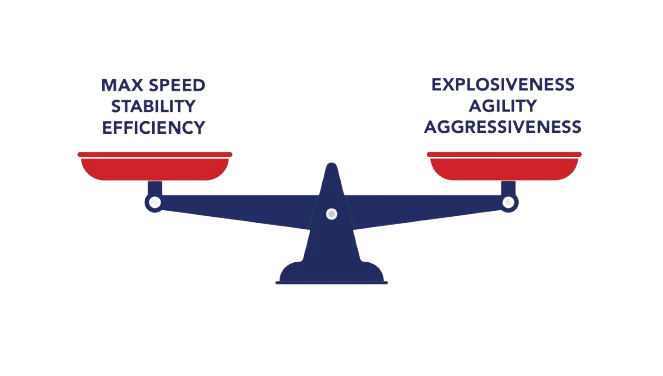
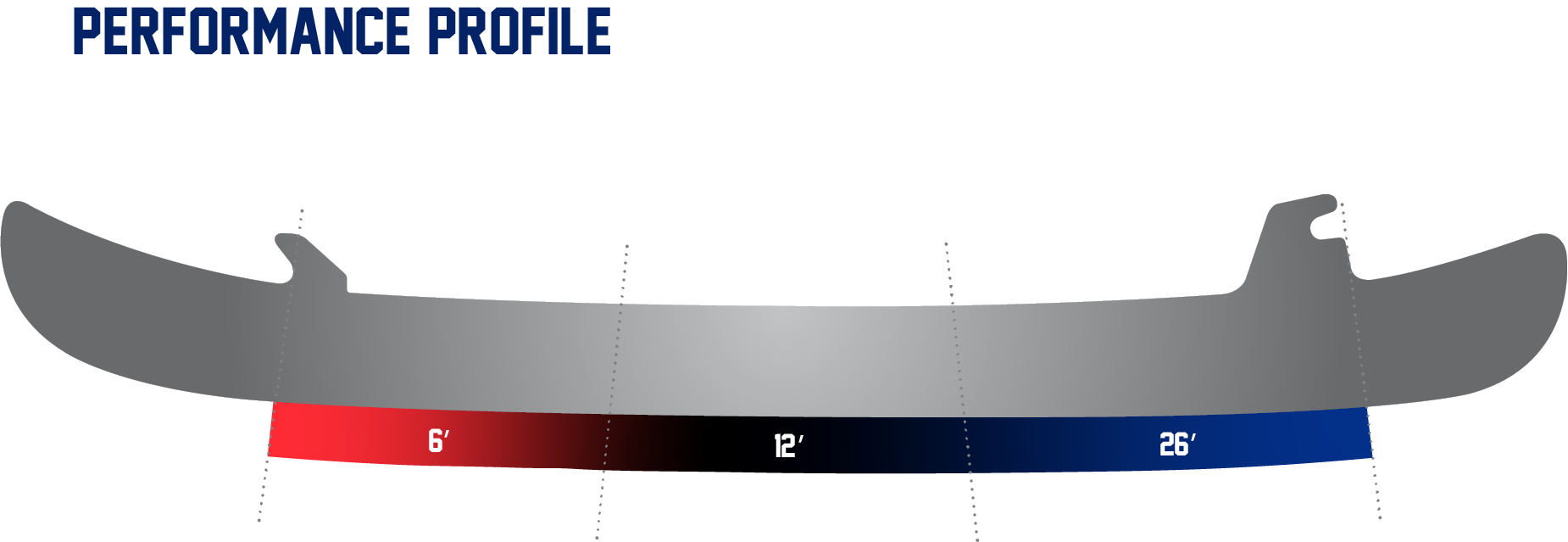
Performance profiling is about strategically combining several curves on one blade to enhance skating performance. A performance profile might, for example, add a smaller radius curve at the front of the blade, to increase agility and acceleration, while maintaining a larger curve at the back for speed and stability.
With a performance profile, players don’t need to choose between agility and stability, or between speed and explosiveness. By adding different curves in a combined sequence, performance profiles allow players to have it all – more agility, more speed, more stability, and more acceleration.
Types of Profiles
There have been many performance profile formulas tried over the years, from CAG and Prosharp to Elite. It is worth finding the performance profile that feels right for your game and skating style.
Profiles are often described by the number of profile curves that are added to the blade shape. Mono profiles have one radius curve, such as a stock 10’ blade. Duos have two radius curves, such as a 7’-12’ duo, which has a 7 foot radius in the front of the blade and a 12 foot radius in the back. Triples have three radius curves and quads have four.
Another way to think about profiles is by their feel. Most profile combinations fit into two broad categories that share common characteristics. At Elite, we refer to these as Heel Glide profiles and Center Glide profiles.
Heel Glide Profiles
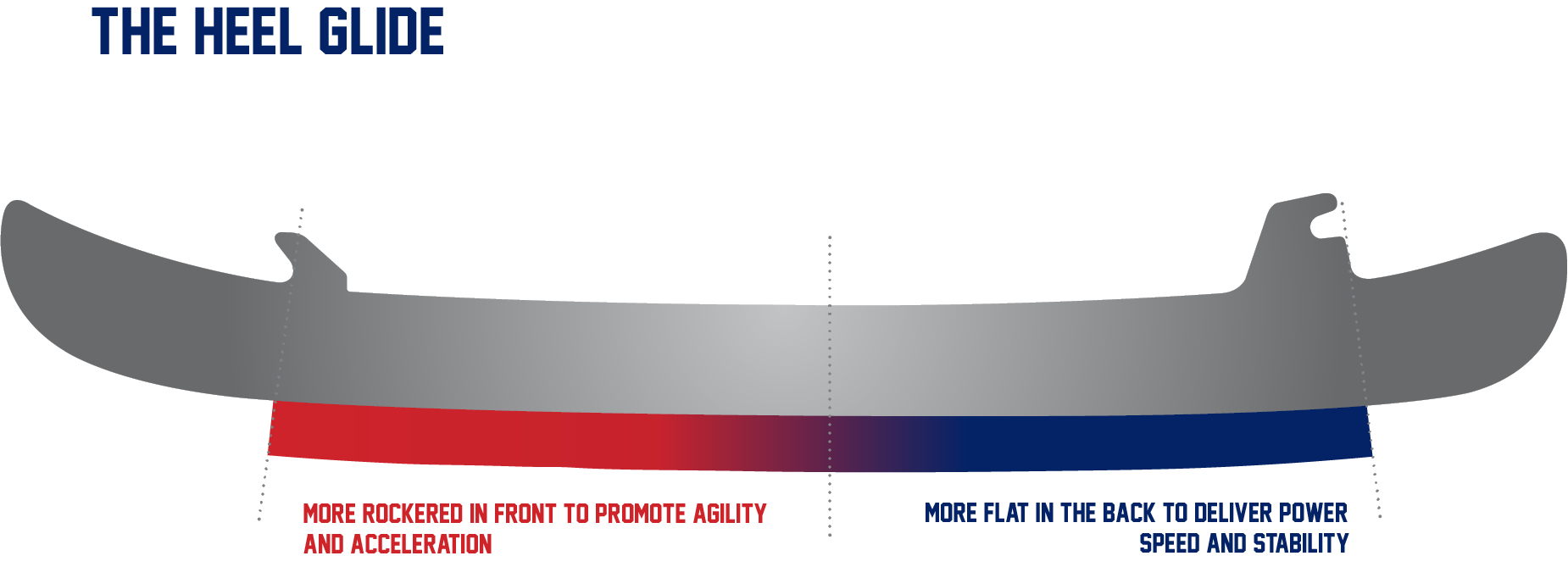
Heel glide profiles are those that are flatter toward the heel (to enhance glide, stability, and speed) and more curved toward the toe (for agility and acceleration). The balance point is a bit front of center and they have a bit of a pitched feel. Most performance profiles on the market today are what we would categorize as Heel Glides.
All Elite’s Duos, Triples, Quads, and the Polaris share the common characteristic of starting out comparatively rockered in front and becoming progressively flatter towards the heel. Prosharp’s zuperiors, quads and duos also fit into this category.
Types of Heel Glide Profiles
Duos
Combining two radius curves, the Duos are some of the earliest performance profiles. With a shorter radius curve in the front and a longer curve in the heel, the Duos have a good balance of agility and stability. Some players find the transition from toe to heel to be a bit abrupt.

Triples
With three radius curves, the Triples are more at the front, progressing to flatter curves at the back. Transitions are smoother than the Duos. They are fast, powerful, and solid, providing a good balance of agility and stability.

Quads
Quads profiles have four different radius curves, with a more gradual transition between curves than the Duos and Triples, and provide an excellent balance of speed, power, agility, and stability. Our Quads are very similar to the Prosharp Quads.

The Polaris Family


Center Glide Profiles
Center Glide profiles flatten an area under the middle of the blade to provide more contact with the ice surface, while the toe and heel sections are comparatively more rockered. The balance point is in the middle of the blade. Elite’s SCS series is our most popular and high performing profile in the Center Glide family. The traditional CAG profiles also fit into this category.
Types of Center Glide Profiles
SCS Series
This is Elite’s proprietary family of Center Glide profiles, with a sequence of flatter radius curves under the middle of the foot, and comparatively rockered toe and heel sections. The effect is a very powerful and smooth-skating profile, which provides high top-end speed and powerful striding turns while preserving agility and explosiveness.The ultimate blend of agility, power, and speed, the SCS is very popular with pro players across North America.

Center Flat Series
The SCS is a much higher performing evolution of the Center Flat design. If you have players that have been skating on a CAG, we highly recommend they try the SCS series, which has much smoother transitions.

Mono Profiles
We recommend our performance profile combinations but understand that some players are more comfortable with a stock blade, such as the 10’ mono radius. The Monos will feel familiar, but with no performance gains in agility, power, speed, or stability. Popular Monos include the 9’, 10’ and 11’.

Goalie Profiles
The standard line of Elite Goalie Profile templates includes both Monos and Performance Duos. Many goalies are finding they like the feel of a Performance Duo, with a slightly shorter radius curve in the front.

Types of Goalie Profiles
Goalie Monos
Goalie Duos

How to Choose the Right Profile
The truth is, there is no magic formula to choosing the right profile. We could tell you that if you are 6’2” and play defense you should choose the SCS2, or if you are an agile forward choose the Polaris, but it really is a personal choice that depends on your skating style, and desired performance attributes.
From our extensive on-ice testing with elite players, we’ve found that most skaters naturally prefer either the slightly pitched feel of a Heel Glide or the more neutral feel of a Center Glide and then refine their choice within that family.
The best way to choose a profile is to try a few on the ice and determine what feels right to you. If that’s not possible, then start by deciding whether you prefer a more centered balance point (Center Glide) or a more forward pitch (Heel Glide), and then review the performance chart beside each profile in our list to find the attributes you want — i.e. more agility, more stability, more speed.
Both the SCS family (Center Glide) and the Polaris family (Heel Glide) are becoming increasingly popular among pro players, but there are many options. Elite offers the widest selection of performance profiles available and our retailer partners have the expertise to help you choose the perfect profile for your playing style.
For more details, click the link below to view full descriptions and performance attributes for our most popular profiles.


How Often Should You Profile?
If you are getting your blade sharpened by hand, you will want to reprofile at least a few times a season. If you bring your blades to an Elite blade performance center we can put your blade on our light box and let you know if your profile is intact or whether you need to reprofile.

Elite's Most Popular Profiles
Download a list of Elite’s most popular profiles with their relative attributes (acceleration agility, speed, stability).
Elite Profile Overview

Elite Profile Poster
Download an 11X17 poster of Elite’s most popular profiles for your equipment room or pro shop.
How To Test Different Profiles With Your Players
A how-to video for Equipment Managers to share how we work with pro players to help them test different performance profiles to find the one that suits them best.