
Types of Profiles
One of the easiest ways to improve your skating performance is to find the profile that helps you skate your best and helps deliver the attributes you are looking for: more acceleration, more agility, more speed, more stability. Below are the most popular profiles offered by Elite Blade Performance for both players and goalies.


Elite’s Profile Ranking System
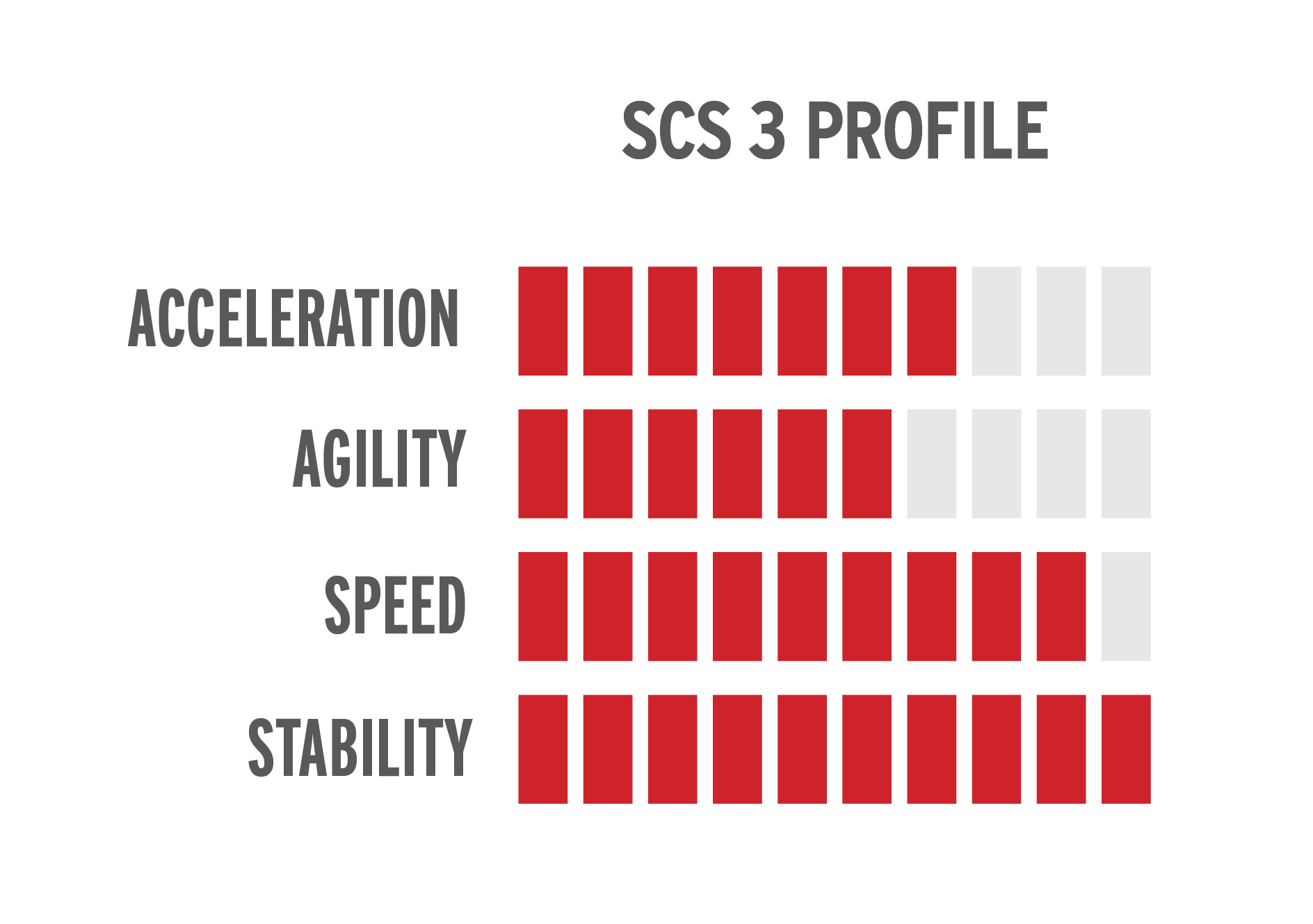
All our performance profiles are ranked according to expert on-ice testing related to four attributes: acceleration, agility, speed and stability. All rankings are relative to a baseline profile: the 10’ mono. In the example below, for example, you can see that compared to the 10’ mono, the Polaris has more acceleration, more ability and a huge boost in both speed and stability.
Elite’s Most Popular Player Profiles
Monos
10’ Mono
Stock, out of the box blade. Decent basic blade with some agility/stability, but no performance gains in agility, power, speed, or stability.
Heel Glides
Polaris 1 (New)

Polaris 2 (Original)
Polaris 3 (New)

EL4.1 Quad
(6’-9’-11’-13’) Large, Standard
(5’-8’-10’-12’) Junior
Fast, powerful, solid. Smooth transitions. Slight forward pitch feel. The lightest feel of the quads. (The 4.1 is similar to the Prosharp Quad Zero.)

EL4.2 Quad
A little less agile feeling than the 4.1, with good balance. A good mix of power and agility. Extremely solid, stable feeling profile. (The 4.2 is similar to the Prosharp Quad 2.)

EL3.1 Triple
(6’-12’-16’) Large, Standard
(5’-10’-13’) Junior
Light, agile toe, with a very slight forward pitch feel. Flatter heel provides good stability. Good mix of agility, power, and stability. (Similar to the Prosharp Zuperior.)

9.5’-10.5’ Duo

7’-13’ Duo

8’-12’ Duo

Center Glides
SCS-1
Large, Standard, Junior
Four radius curves, flattest in the center of the blade. Very powerful and smooth-skating profile, with high top-end speed and powerful turns while preserving agility and explosiveness. The ultimate blend of agility, power, and speed. This is the most agile of the SCS profiles, with the most rockered heel and toe sections.

SCS-2
Has the same mid-foot flatter-radius curves as the SCS-1, but with slightly less rockered heel and toe for greater power and stability.

SCS-3
Slightly flatter mid-foot radius curves than the SCS1 and 2, and slightly less rockered heel and toe making for an extremely stable and powerful profile with slightly less agility.
Image: SCS 3 attributes
Center Flat Profiles
| Center Flat Length (mm) | Neutral Position | Forward P1 Position | Forward P2 Position |
|---|---|---|---|
| 40 | 20-20 | 23-17 | 27-13 |
| 50 | 25-25 | 29-21 | 33-17 |
| 60 | 30-30 | 35-25 | 40-20 |
| 70 | 35-35 | 41-29 | 47-23 |
| 80 | 40-40 | 47-33 | 53-27 |
Elite’s Most Popular Goalie Profiles
Goalie Profiles
28’ Mono
30’ Mono
26’-30’ Duo

Elite's Most Popular Profiles

Elite Profile Overview

Elite Profile Poster
Profiling 101 with Elite
Elite’s Director of Pro Sales, J.P. O’Connor, provides an overview of the basic concepts of profiling, performance profiling, and the different types of profiling available.
How To Test Different Profiles With Your Players
A how-to video for Equipment Managers to share how we work with pro players to help them test different performance profiles to find the one that suits them best.